
Trying to choose between canalfront and soundfront in Southern Shores? Both offer the Outer Banks lifestyle you want, but the details matter when it comes to views, boating, insurance, permits, and long-term upkeep. If you understand the tradeoffs, you can buy or sell with confidence. Below, you’ll find a clear comparison, practical checklists, and answers to the questions we hear most. Let’s dive in.
Canalfront vs soundfront basics
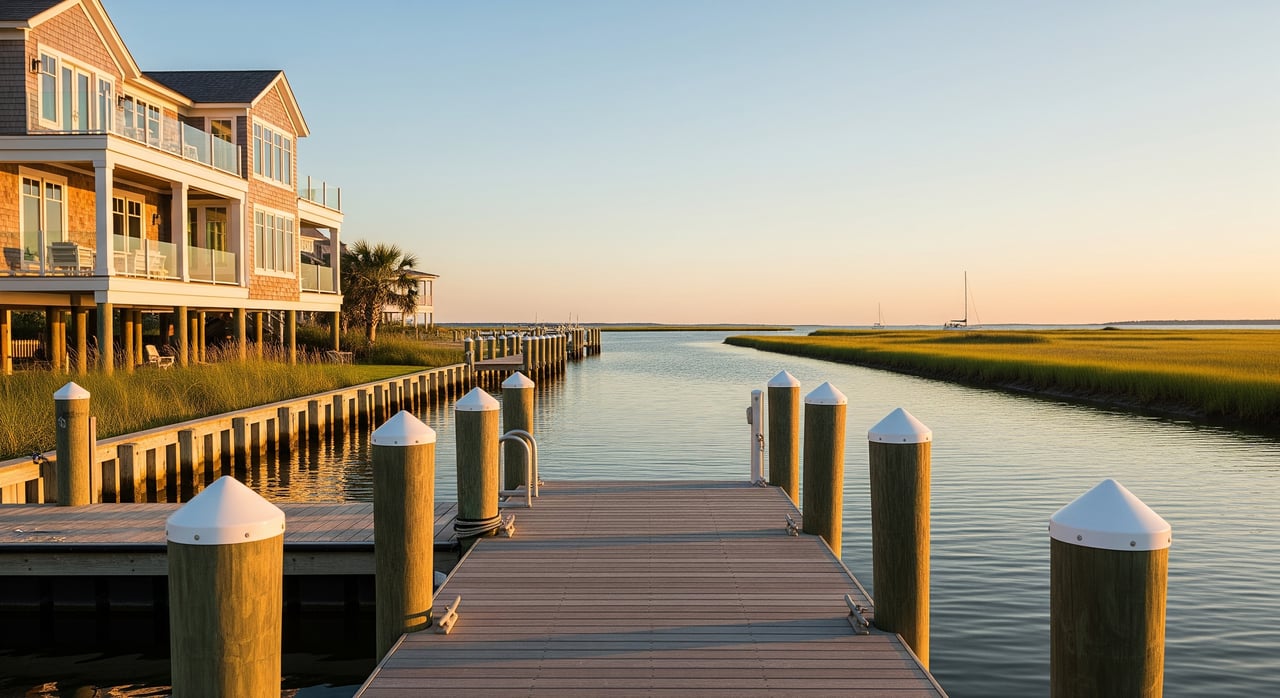
In Southern Shores, soundfront homes sit on the natural shoreline of Currituck Sound. You get open water on your back side and broad horizons. Canalfront homes line man-made or natural canals that connect to the Sound, often within neighborhoods that value sheltered docking and easier paddle sports.
Both settings put you close to the water. Your best fit depends on how you plan to use the property, your boating needs, and your tolerance for exposure to wind, waves, and surge.
Views, privacy, and daily life
Soundfront typically delivers wider, more panoramic views across Currituck Sound. It can feel more private on the water side because you are not facing another dock across a canal. You will also feel more open-water exposure that changes with wind and weather.
Canalfront feels more intimate, with views of a narrower waterway and neighboring docks. Many families like the calmer setting for paddle boarding and swimming. The tradeoff is less of a horizon view and the presence of nearby boats and docks.
Boating and water access
Soundfront gives you direct access to open sound for fishing, crabbing, and cruising. Currituck Sound can be shallow in places, so larger-draft boats should plan routes carefully. You avoid canal bottlenecks but still need to know local depths.
Canalfront provides protected docking and easy day-to-day boat use. Your experience depends on canal depth, width, and any fixed bridges. Many canals require periodic dredging to stay navigable, and not all canals accommodate larger boats.
Storm surge and flooding
Both canalfront and soundfront properties are on a barrier island and can experience coastal flooding. Soundside surge and canal backflow behave differently from oceanfront wave action. Historical storm impacts vary by lot, elevation, and shoreline shape.
Your best move is to verify the FEMA flood zone, obtain an elevation certificate, and review any documented flood history for the specific property. Small elevation changes can influence both risk and insurance cost.
Permits, rights, and HOAs
Waterfront work often involves multiple authorities. In Southern Shores, you should expect to confirm local permitting for docks, bulkheads, setbacks, and coastal construction. State-level coastal rules may apply, and certain projects can require federal review.
If the home is in a canal neighborhood, review HOA covenants for rules on docks, boat sizes, and maintenance obligations. Some communities share dredging costs through assessments. Also review a survey that shows the mean high water line and riparian boundaries.
Insurance and financing
Most lenders require flood insurance if a property is in a Special Flood Hazard Area. Along the coast, homes may sit in AE, VE, or other zones. VE zones generally carry higher risk and premiums, but every property is different.
Insurance costs are driven by flood zone, elevation, building construction, and underwriting, not just whether a home is canalfront or soundfront. Obtain an elevation certificate and get quotes early. For wind and hurricane exposure, expect coastal deductibles and, in some cases, separate wind coverage.
Maintenance and long-term costs
Docks, bulkheads, and boatlifts need periodic care, and saltwater speeds corrosion. Materials, age, and exposure drive costs. Living shoreline solutions are gaining traction in North Carolina and may affect permitting and budget.
Canals naturally shoal over time. Dredging requires permits and can be expensive. Ask for the canal’s dredging history, funding plan, and any pending assessments. Where septic systems are present, confirm tank and drainfield condition and placement relative to high water.
Market value and rentals
Waterfront homes usually command a premium over non-waterfront. The difference between canalfront and soundfront depends on view quality, usable shoreline, dock infrastructure, lot elevation, and seasonal demand. Appraisers lean on comparable waterfront sales.
For vacation rentals, soundfront homes with wide views often attract premium bookings, while canalfront with private docks appeals to boating families. Local short-term rental rules and seasonality influence income potential, so verify what is allowed before you count on revenue.
Which is right for you
- You want the biggest views and direct open-water access: Choose soundfront and confirm depth along your preferred boating routes.
- You want protected docking and family-friendly paddling: Choose canalfront and confirm canal depth, bridge clearances, and dredging plans.
- You prioritize insurance and risk: Compare elevation certificates and flood zones first. The lower-risk lot often wins on cost.
- You prefer lower maintenance: Focus on newer shoreline structures or living shoreline options, and confirm canal assessments.
Buyer checklist
- Confirm lot type and water access: soundfront or canalfront, private or HOA canal.
- Review FEMA flood zone and order an elevation certificate.
- Obtain a current survey showing mean high water line and riparian boundaries.
- Verify permits for docks, bulkheads, boatlifts, and any shoreline work.
- Inspect dock condition, utilities, and lift capacity.
- Ask for canal depth details, dredging history, and any upcoming assessments.
- Read HOA rules for docks, rentals, and architectural review.
- Determine septic or sewer status and verify permits and condition.
- Request documentation of past storm damage and repairs.
- Get insurance quotes for flood and wind based on the elevation certificate.
- Confirm local rental rules and any licensing requirements.
- Check proximity to public boat ramps and marinas if needed.
Seller checklist
- Gather permits and records for docks, bulkheads, lifts, and shoreline work.
- Order or update an elevation certificate to help buyers price insurance.
- Provide a recent survey with water boundaries and easements.
- Document canal dredging history, assessments, and HOA contacts.
- Service docks and lifts or disclose condition and age.
- Compile insurance, claims history, and storm repair documentation.
- Verify septic inspections or maintenance records if applicable.
- Clarify rental performance and local rules for prospective buyers.
How we help in Southern Shores
You deserve clear guidance rooted in local knowledge. Our boutique team pairs hands-on marketing with specialist coverage across the central Outer Banks. We help you verify permits, flood zones, dock condition, canal obligations, and rental rules so you can move forward with confidence.
Whether you are buying your first waterfront home or preparing a high-value sale, we tailor the strategy to your goals and timeline. Ready to compare specific Southern Shores listings side by side? Connect with Elizabeth Cloninger for a local, data-informed plan.
FAQs
What is the difference between Southern Shores canalfront and soundfront homes?
- Soundfront sits on Currituck Sound with broad views and direct open-water access; canalfront lines a canal with protected docking and narrower, more intimate views.
How do flood insurance costs compare for Southern Shores waterfront homes?
- Costs depend on FEMA flood zone, elevation, construction, and underwriting more than canalfront vs soundfront; get an elevation certificate and quotes early.
What should I ask about canal dredging before buying in Southern Shores?
- Request the canal’s depth specs, recent dredging history, permits, the funding plan, and any pending or historic HOA assessments that could affect you.
Can I build or replace a dock on a Southern Shores waterfront lot?
- You typically need local and state coastal permits, and in some cases federal review; confirm rules for docks, bulkheads, setbacks, and living shorelines before work.
Are soundfront homes more private in Southern Shores?
- Often yes on the water side due to open views and no opposite dock, though exposure to wind and surge may be higher depending on the lot.
Is a canalfront property good for vacation rental income in Southern Shores?
- Canalfront homes with private docks attract boating families and can rent well, but income depends on view quality, amenities, and local rental rules.