
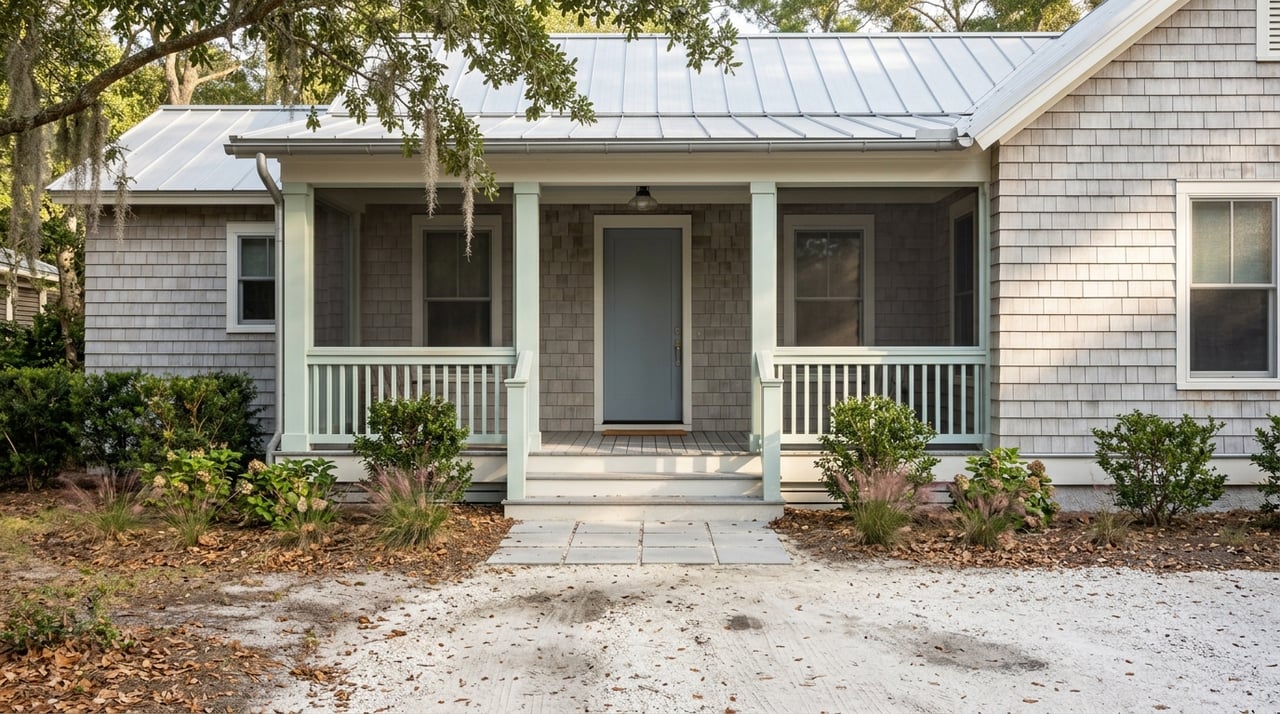
If you only know Southern Shores in July, you are missing the version many people fall in love with most. Outside the peak season, this barrier-island town feels quieter, more residential, and more rooted in everyday routines than in visitor traffic. If you are thinking about buying, relocating, or simply trying to picture daily life here, this guide will help you understand what Southern Shores looks like after summer fades. Let’s dive in.
Southern Shores Feels Residential Year-Round
Southern Shores stands apart from busier beach destinations because it is built first as a residential town. Town planning materials show that about 64 percent of land use is residential, while only about 2 percent is commercial, with most commercial activity concentrated near Highway 158 on the southern edge of town.
That land-use pattern shapes daily life in a practical way. Instead of a dense commercial strip at the center of town, you get a more neighborhood-based setting where homes, local roads, and community access points define the rhythm of the day. In the off-season, that can make the town feel especially calm and local.
For many buyers, that is a major part of the appeal. If you want a coastal setting that feels lived-in rather than built around constant activity, Southern Shores offers a very different experience from more commercial beach areas nearby.
Daily Routines Still Revolve Around the Water
Even after summer, beach and soundside access remain a big part of everyday life in Southern Shores. The difference is that access here is more controlled and neighborhood-oriented than in towns with large public beach parks.
Town materials note that there are no public access points to the ocean or soundside. Instead, access is handled through private walkways, association lots, and limited town-managed parking. The town also states that permits are required only for town-owned beach-access parking lots, while street parking is generally not allowed unless posted otherwise.
That setup helps explain why daily life here often feels more private and low-key. You are not stepping into a heavily commercial beachfront environment. You are moving through a system shaped by residential ownership, associations, and managed access.
Off-Season Beach Use Gets Easier
One of the clearest everyday shifts after summer is how the beach feels. There are fewer crowds, less seasonal traffic, and more room for simple routines like morning walks or sunset outings.
The town’s beach rules also make the off-season appealing for dog owners. Between May 15 and September 15, dogs are allowed on the beach only from 6 p.m. to 9 a.m. Outside that period, there is no time restriction.
That means fall, winter, and early spring can open up a more flexible beach lifestyle. If your ideal day includes a walk with your dog, a quiet shoreline, and a slower pace, the off-season can be one of the most enjoyable times to be here.
Walking and Biking Stay Part of Daily Life
Southern Shores is not just about the beach. The town also supports a steady outdoor routine through its road network, rights-of-way, and multi-purpose paths.
Public Works says it maintains about 40 miles of streets, along with town buildings, beach-access parking areas, and the town’s multi-purpose paths. Town trail materials also note that most roads and rights-of-way are town-owned, with walkways along those roads that create safe connections for walking and biking.
That matters if you are picturing year-round life instead of a vacation snapshot. In the quieter months, those paths and connections help make the town feel usable and connected for everyday movement, whether you are heading out for exercise, a bike ride, or a casual walk.
Association Amenities Shape the Lifestyle
A key part of Southern Shores living is that many recreation assets are association-managed rather than municipal. That means your access can depend on ownership or membership, which is important to understand if you are considering a purchase.
Town trail and amenities materials list SSCA features such as beach-access walkways and overlooks, Hillcrest tennis courts, neighborhood parks, and three marinas with boat slips, a launch ramp, and bulkheaded areas for crabbing and fishing. The same materials describe CPOA open space, pathways, canal areas leading to Currituck Sound, and canal-side park space.
For you as a buyer, this means lifestyle can vary from one property to another. Two homes may both have a Southern Shores address, but the nearby amenities, water access patterns, and association benefits may feel very different in daily use.
Nearby Duck Fills Many Everyday Needs
Southern Shores has a limited retail footprint, so many daily errands, casual meals, and outings happen in nearby commercial areas. That is not a drawback for everyone. In fact, many people like the separation between where they live and where they shop or dine.
Town land-use materials confirm that commercial uses are a small part of Southern Shores itself. Nearby Duck often functions as a village-style destination for shopping and dining, with a six-mile Duck Trail, a soundside boardwalk that extends nearly a mile, and a mix of small shops and restaurants.
Duck’s town park also adds more options for a relaxed afternoon, including maritime forest trails, a playground, a kayak and canoe launch, and soundside views. For many residents, this nearby access helps balance Southern Shores’ quiet residential setting with convenient places to go when you want a little more activity.
Off-Season Traffic Feels More Local
If you have only visited the Outer Banks in peak season, traffic may be one of the first things you notice. Town transportation materials note that NC 158 and NC 12 can become congested during the summer tourist season.
Once the peak season eases, that congestion generally softens. The result is a more local-feeling pace for daily drives, easier trips to nearby towns, and a stronger sense of Southern Shores as a year-round community rather than just a seasonal destination.
That shift can be meaningful if you are relocating or spending more extended time here. Your day-to-day experience often depends just as much on ease and rhythm as it does on views and amenities.
Coastal Living Still Requires Practical Planning
The quieter pace does not mean year-round life is carefree. Southern Shores is a barrier-island town, and town outreach has focused on flooding, storm surge, heavy rainfall, and drainage issues.
If you are thinking about buying here, it helps to view that as part of the normal coastal equation. Everyday life includes storm awareness, keeping up with local conditions, and understanding how a specific property fits into the broader setting.
This is one reason local guidance matters when you are comparing homes, land, canal properties, or water-oriented neighborhoods. The lifestyle is appealing, but the practical side of coastal ownership deserves just as much attention.
What Buyers Should Notice Beyond Summer
When you explore Southern Shores in the off-season, try to pay attention to how the town functions on a normal week. Notice the residential feel, how close the paths and beach access points are to a property, and how easily you can reach nearby services.
It also helps to ask property-specific questions about association access, parking, nearby water features, and the daily patterns that matter most to you. For some buyers, that means quiet beach access and walkability. For others, it means proximity to marinas, canal areas, or easy drives to Duck and the rest of the central Outer Banks corridor.
The main takeaway is simple: Southern Shores beyond summer is not a sleepy version of a tourist town. It is a residential coastal community where beach access, outdoor movement, nearby village conveniences, and practical coastal awareness all shape daily life.
If you are trying to decide whether Southern Shores fits your goals for a primary home, second home, or investment-minded coastal purchase, local context makes all the difference. Elizabeth Cloninger can help you compare neighborhoods, understand property-specific lifestyle differences, and find the right fit for how you want to live on the Outer Banks.
FAQs
What is everyday life like in Southern Shores outside summer?
- Everyday life in Southern Shores is generally quieter and more residential, with routines centered on beach access, walking and biking paths, association amenities, and nearby shopping and dining in places like Duck.
Does Southern Shores have a busy commercial district?
- No. Town planning materials show commercial uses make up a small share of land use, and most commercial activity is concentrated along Highway 158 near the southern edge of town.
Can you walk or bike around Southern Shores year-round?
- Yes. Town materials say most roads and rights-of-way are town-owned, and walkways along those roads create safe connections for walking and biking.
How does beach access work in Southern Shores?
- Beach access is handled through private walkways, association lots, and limited town-managed parking rather than large public beach parks. Permits are required only for town-owned beach-access parking lots.
Are dogs allowed on Southern Shores beaches in the off-season?
- Yes. The town states that dogs have no time restriction on the beach outside the period from May 15 to September 15.
Where do Southern Shores residents go for shopping and dining?
- Many everyday shopping and dining trips happen in nearby commercial areas, especially Duck, which offers shops, restaurants, a soundside boardwalk, and a town park.
What should buyers understand about year-round living in Southern Shores?
- Buyers should understand that Southern Shores combines a calm residential setting with practical coastal factors like managed access, association-based amenities, and awareness of flooding, storm surge, rainfall, and drainage conditions.