
Thinking about a condo or a single-family home in Kill Devil Hills and not sure which type of association fits you best? You are not alone. Between coastal weather, flood insurance, and rental rules, the details matter more here than in many markets. In this guide, you will learn how HOAs and COAs work in KDH, what fees typically cover, how insurance and short-term rentals factor in, and how to do smart due diligence. Let’s dive in.
HOA vs COA: Quick definitions
A condominium owners association (COA) governs a condo project where you own your unit’s interior and share ownership of the building structure and land. The COA manages common elements and handles exterior maintenance per the condo documents.
A homeowners association (HOA) governs a planned community of single-family homes or townhomes. You own the lot and the structure. The HOA enforces covenants, maintains shared areas, and may provide limited services, depending on the community.
Where you see HOAs and COAs in KDH
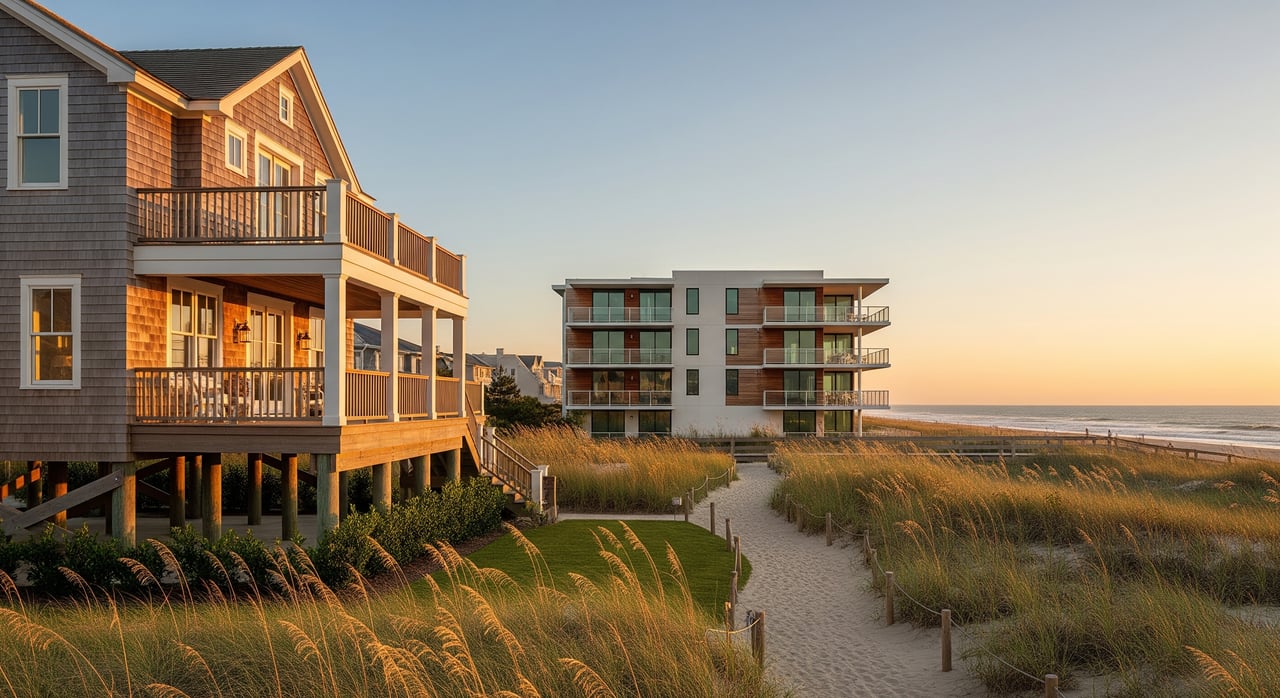
In Kill Devil Hills, oceanfront and soundfront buildings with stacked units are commonly COAs. Inland neighborhoods with detached homes or townhomes are often HOAs. Both types can include vacation rentals, so rules around rentals are common and vary by community.
What dues usually cover in KDH
COA dues often include
- Exterior and structural maintenance, such as roof, siding, painting, and elevators
- Common areas and amenities, like pools, parking, landscaping, and hallways
- Utilities for common areas, sometimes select unit utilities like water, sewer, or trash
- Master insurance for the building and common areas, plus reserve contributions
HOA dues often include
- Common-area upkeep, such as private roads, entrance landscaping, parks, and sidewalks
- Community amenities, like a clubhouse, pool, or gate when present
- Limited exterior services in some communities, while owners usually handle their own building exteriors and major systems
Fee ranges to expect (approximate)
Dues vary by location, building age, amenities, and how many owners share costs. Use these as broad Outer Banks context, then confirm per property.
- COAs near the ocean with elevators and multiple amenities: often mid hundreds to over $1,000 per month
- Smaller or soundside condo projects: commonly $200 to $600 per month
- HOAs for smaller neighborhoods: often $100 to $600 per year
- HOAs with amenities or more services: roughly $25 to $300+ per month
Reserve contributions and large capital needs will affect dues over time. Associations with aging oceanfront structures may face higher costs.
Reserves and special assessments
Healthy reserves fund major repairs and replacements. Low reserves can lead to special assessments, which are extra owner fees for big projects. Be alert to:
- Minimal reserves compared with known needs
- Repeated special assessments in recent years
- Large projects noted in meeting minutes or budgets
Insurance basics: COA vs HOA
In a COA, the association usually carries a master policy for the structure and common elements. You would typically carry an HO-6 policy for interior finishes, personal property, and liability. Always confirm what the master policy covers and where your responsibility begins.
In an HOA, the association insures common areas and liability. You would typically carry an HO-3 or HO-5 policy for your home and contents. Clarify responsibilities for the roof, exterior, and building envelope.
Flood, wind, and coastal realities in KDH
Kill Devil Hills faces coastal flood and storm risk. Flood zones and elevation can materially affect your insurance cost.
- If a property sits in a high-risk flood zone and you use a federally regulated lender, flood insurance is typically required. It is still recommended in many areas even if not required.
- Review flood maps, any elevation certificate, and your lender’s requirements early. NFIP policies are common in the OBX, and private flood options may be available.
- Oceanfront or exposed soundfront buildings see faster exterior wear from salt, wind, and moisture, which can drive maintenance and claims.
Rentals and short-term rentals
Many KDH homes and condos operate as short-term rentals. Both HOAs and COAs can regulate rentals through their documents. Rules can include minimum stays, occupancy limits, registration, or even prohibitions on short-term rentals. Town and county rules also apply for taxes and compliance, and these policies evolve.
- If you plan to rent: verify rental allowances, any association application process, and typical occupancy history.
- If you plan to live full-time: understand how rental activity may impact parking, noise, and shared facilities.
Governance and due diligence: what to review
Before you go under contract, or as soon as you can, request the full association packet. Key items include:
- Declaration/CC&Rs, bylaws, and current rules
- Operating budget, financials, reserve study if available, and current reserve balances
- Master insurance policy declarations and certificates
- Board meeting minutes for the last 12 to 24 months
- History of special assessments and planned capital projects
- Any pending litigation disclosures
- Rental and guest policies
- An estoppel or resale certificate that shows dues, delinquencies, and assessments
Red flags include low reserves, frequent or large special assessments, high delinquency rates, litigation for defects or finances, very high dues versus peers, or restrictive rules without clear rationale.
Financing differences to consider
Condo projects may need to meet HUD, Fannie Mae, VA, or lender project requirements for certain loans, especially low down payment programs. Not all projects qualify for FHA or VA. If a condo is not eligible, you may need a larger down payment or a different loan product.
For homes in HOAs, standard mortgage options are common, but lenders still review covenants and dues in your approval.
Which fits your goals?
- You prefer low-maintenance living and shared amenities: a COA may suit you, but confirm reserve strength, insurance coverage, and rental rules.
- You want more autonomy and control over your property: a single-family in an HOA may fit, with typically lower dues but more responsibility for exterior upkeep and insurance.
- You are buying for investment or a second home: both can work, but weigh rental policies, total cost of ownership, and long-term maintenance.
Buyer checklist for KDH
- Clarify exactly what the dues cover, including utilities and insurance
- Confirm master policy coverage and your required policy type and limits
- Ask if flood insurance is required and obtain quotes based on the property’s flood zone and elevation
- Review the reserve study and current reserve balances
- Check for special assessments in the last 5 years and upcoming projects
- Request recent board minutes, current-year budget, and any litigation details
- Verify rental rules, minimum terms, and any registration or occupancy limits
- For condos, confirm whether the project meets your loan program’s requirements
Practical examples
- Full-time resident seeking control and privacy: an HOA single-family home may align with your priorities. You will handle exterior maintenance and carry your own structure insurance, with possibly lower dues.
- Second-home owner who wants lock-and-leave convenience: a COA may make sense, since exterior and structural maintenance is often included. Still, review reserves and special assessment history, especially in oceanfront buildings.
- Investor targeting STR income: either model can work. Your due diligence on rental rules, insurance costs, and association health will drive the numbers.
Your next step
The right fit in Kill Devil Hills comes down to total cost, maintenance appetite, financing path, and rental plans. Take time to compare dues line items, insurance responsibilities, flood exposure, and reserves across your short list. A careful review now can save you from surprise assessments later.
If you want a local, resort-savvy team to help you weigh the tradeoffs and request the right documents early, reach out to Elizabeth Cloninger. We will help you narrow options, model total cost, and move forward with confidence.
FAQs
What does a COA fee typically cover in Kill Devil Hills?
- COA dues often include exterior and structural maintenance, common-area upkeep and amenities, some shared utilities, the building’s master insurance, and reserves for major repairs.
How do flood zones affect insurance costs for KDH homes and condos?
- Properties in higher-risk flood zones usually face lender-required flood insurance and higher premiums, so review flood maps, elevation data, and quotes early in your process.
Are short-term rentals allowed in KDH HOAs and COAs?
- Many associations allow STRs with rules on minimum stays, occupancy, or registration, while some restrict or prohibit them, and town and county requirements also apply.
What financing issues can arise with condos in KDH?
- Some condo projects do not meet FHA, VA, or certain conventional project standards, which can limit loan options or increase down payment requirements.
What documents should I review before buying in an association in KDH?
- Review the declaration, bylaws, rules, budget, financials, reserve study, insurance certificates, meeting minutes, assessment history, litigation disclosures, and a resale certificate.
What are common red flags in OBX associations?
- Low reserves, repeated or large special assessments, high dues versus peers, high delinquency rates, pending litigation, or restrictive rules without clear reasoning.