
If you are getting ready to sell a waterfront home in Manteo, the view alone is not enough to carry your listing. Buyers will notice the water, but they will also notice cloudy windows, dock clutter, missing paperwork, and signs that waterfront features have not been maintained. A strong pre-listing plan helps you present the property clearly, answer buyer questions faster, and avoid preventable delays once showings begin. Let’s dive in.
Why waterfront prep matters
A Manteo waterfront home is often judged online before a buyer ever steps inside. Recent National Association of Realtors research found that 81% of buyers rated listing photos as the most useful feature in their online search. That matters even more when your property includes a water view, dock, deck, or shoreline feature that should stand out in photos.
Staging and prep should happen before photography, not after your listing goes live. Clean windows, open window treatments, decluttered rooms, and simple outdoor spaces help buyers focus on what makes the property special. On a waterfront listing, the goal is to make the home and the view work together.
Focus on the view first
One of the most important prep steps is to treat the water view like a major feature of the home. If furniture, decor, or heavy window coverings block sightlines, buyers may miss one of the property’s biggest selling points. Your main living areas should feel bright, open, and easy to photograph.
Clean windows can make a noticeable difference in a Manteo waterfront home. They help the home feel sharper, brighter, and more connected to the outdoors. If your property overlooks Shallowbag Bay or another nearby waterway, clear glass can help that backdrop show up much better in person and online.
Improve curb appeal from both sides
With a waterfront property, curb appeal is not just about the road approach. Buyers may form opinions from the front entry, backyard, dock, and water side of the property. That means your prep plan should cover both the street-facing side and the shoreline-facing side.
Start with the basics at the front of the home. Clear clutter, refresh the entry, clean visible surfaces, and make sure address numbers are easy to read. Small details like tidy planters and a neat walkway can make the property feel better cared for before buyers even walk inside.
Then carry that same standard to the rear exterior. Sweep decks, straighten outdoor seating, remove worn or unnecessary items, and make sure the dock area looks orderly. The home should feel cohesive from the driveway to the shoreline.
Get the dock area photo-ready
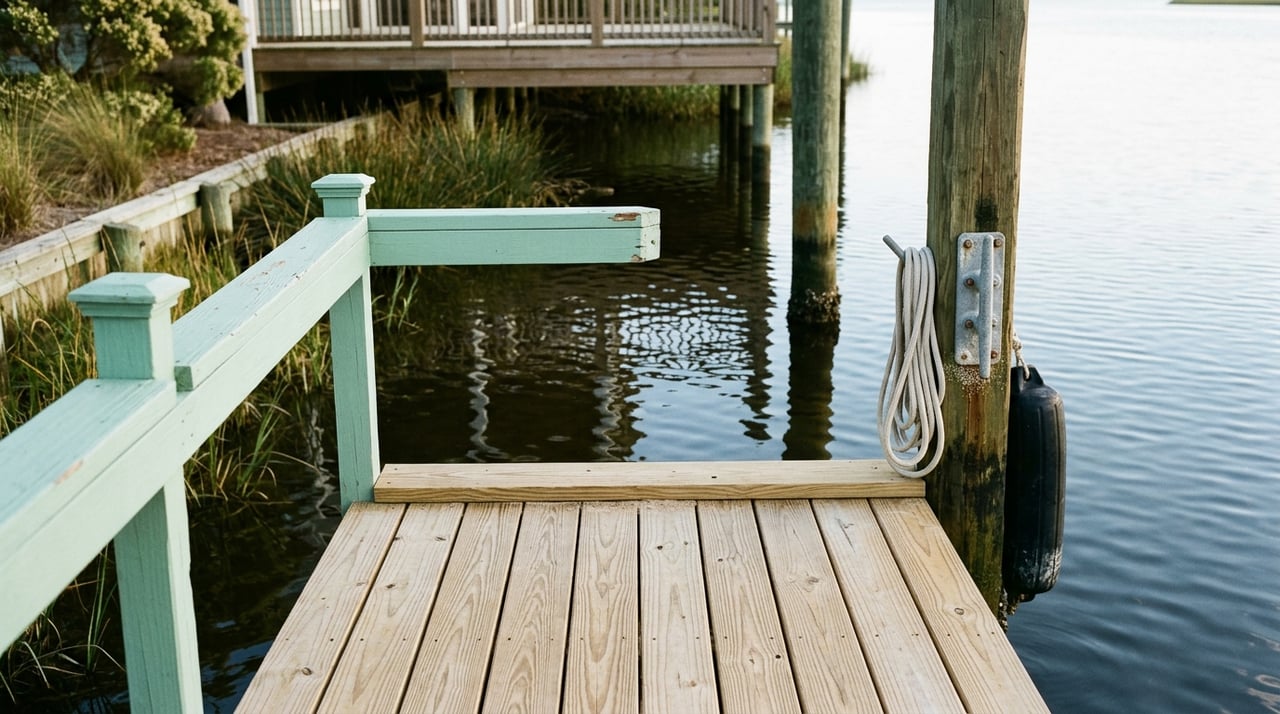
In Manteo, the dock and waterfront setup are part of the product you are selling. If you have a pier, dock, boat lift, or mooring area, buyers are likely to look closely at condition, usability, and appearance. A cluttered or poorly presented waterside area can distract from an otherwise strong listing.
Before photos and showings, remove visual clutter like extra lines, loose gear, worn hoses, stacked supplies, or unused equipment. Secure boats or personal watercraft neatly if they will remain visible. The goal is to present the waterfront area as functional, clean, and easy for buyers to understand.
This also matters from a local compliance standpoint. The Town of Manteo regulates activity in its jurisdictional waters, including Shallowbag Bay, Doughs Creek, and Scarboro Creek. If your property includes visible mooring setups, vessels, or gear, it is smart to make sure everything appears organized and properly managed before you market the home.
Check waterfront permits early
Waterfront buyers often ask questions that go beyond the house itself. They may want to know when the dock was built, whether shoreline work was permitted, or if a bulkhead has been repaired or replaced. If you wait until due diligence to gather that information, you may lose time and momentum.
North Carolina’s Division of Coastal Management handles CAMA permitting and maintains permit records for coastal development. If your property has had work done on a dock, pier, bulkhead, or shoreline stabilization feature, it is helpful to gather the permit numbers, approvals, and any records of later modifications before listing.
If you cannot locate your documents right away, make that a priority early in the process. Buyers tend to feel more confident when waterfront improvements come with a clear paper trail. It also helps reduce uncertainty if questions come up after the home is under contract.
Review shoreline work and repairs
Shoreline features deserve their own review before the listing goes live. If you have completed recent repairs, added stabilization, or addressed erosion concerns, gather invoices, contractor details, and permit-related records in one place. That way, you are ready if a buyer asks what was done and when.
If shoreline work is unfinished, recently modified, or unclear from a permit standpoint, confirm the status before marketing the property. North Carolina’s coastal guidance notes that shoreline stabilization can involve different permit paths depending on the work and location. It is much easier to sort that out before your home hits the market than during negotiations.
For some properties, living shorelines may also be part of the conversation. North Carolina recognizes living shorelines as an accepted stabilization approach in many settings, so any records tied to that type of work should also be gathered and organized.
Build a strong document package
A well-prepared seller file can make a real difference on a Manteo waterfront listing. Waterfront homes often generate more detailed questions than inland properties, especially about flood zones, docks, access, permits, and private utility systems. When you have clear records ready, buyers can review the property with more confidence.
A practical pre-listing document folder may include:
- Deed history
- Parcel or tax record
- Survey or plat, if available
- Current flood map or FIRM panel
- Elevation certificate, if you already have one
- Dock, pier, bulkhead, or shoreline permits
- Records of waterfront repairs or improvements
- Septic records, if applicable
- Well records, if applicable
- Owners' association documents, if applicable
Dare County offers property record tools, but the county notes that its GIS property search is a working reference and not for legal purposes. For legal records, owners and lenders are directed to the Tax Department or Register of Deeds. Pulling your key documents early can save time once buyer interest starts building.
Gather flood information buyers may request
Flood documentation is one of the most common areas of buyer interest on a waterfront home. In many cases, buyers want to understand the current flood map, whether an elevation certificate exists, and whether there have been any map changes tied to the property. Having those items ready helps keep conversations straightforward.
Dare County’s flood-zone webmap can be useful because it compares previous and current effective flood zones. The county also notes that a property may appear unchanged even when the base flood elevation has changed. That makes it worth reviewing flood-related records carefully before listing.
If you already have a current flood map, elevation certificate, or map-change letter tied to the parcel, place those in your seller file. Even if a buyer or lender later orders updated information, having your current records ready creates a smoother starting point.
Confirm septic, well, and HOA records
If your home uses a private septic system or private well, buyers may ask about system type, age, and permit history. North Carolina’s Residential Property Disclosure Act requires sellers to disclose information that can include water supply and sanitary sewage disposal systems. Dare County Environmental Health maintains searchable well permit and wastewater or septic permit data, which can help you verify what is on record.
If your property is subject to an owners' association or mandatory covenants, gather those documents early as well. North Carolina requires a separate owners' association and mandatory covenants disclosure statement. Dues, assessments, contact details, fees, and other association-related items may need to be disclosed before an offer is made.
Prepare the home for photos and showings
Once your paperwork is underway, return to presentation. The best listing photos usually come from homes that feel simple, bright, and easy to move through visually. That means cleaning thoroughly, opening window treatments, turning on lights, and removing excess items from counters, shelves, and outdoor areas.
Start with the rooms buyers tend to notice first. Focus on the main living area, kitchen, primary bedroom, and any space with direct water views. Then make sure decks, porches, and dock access points feel just as ready as the interior.
For waterfront sellers, timing matters. If the home is photographed before the windows are washed or before the dock is cleaned up, the online presentation may not fully reflect the property’s value. Since photos are such a major part of buyer decision-making, it is worth getting the house camera-ready before the shoot is scheduled.
A simple Manteo seller checklist
If you want a practical way to organize your next steps, use this short pre-listing checklist:
- Wash windows and open window treatments
- Declutter key living spaces before photography
- Clean and simplify decks, patios, and outdoor seating areas
- Tidy the front entry and update small curb-appeal details
- Remove or organize dock and boating gear
- Secure visible boats or personal watercraft neatly
- Gather flood map and elevation documents already on hand
- Pull deed, parcel, tax, and permit-related records
- Locate dock, shoreline, bulkhead, or repair paperwork
- Confirm septic, well, and HOA records if they apply
Final thoughts
Listing a waterfront home in Manteo takes more than standard seller prep. You are not just presenting square footage and finishes. You are presenting water access, views, shoreline features, and the records that support them.
When the home looks clean from the road and from the water, and when your key documents are already organized, buyers can focus on the property instead of the unknowns. If you want a tailored plan for timing, pricing, and waterfront-specific prep, Elizabeth Cloninger can help you build a thoughtful strategy for your Manteo sale.
FAQs
What should you do before listing a Manteo waterfront home?
- Focus on both presentation and paperwork by cleaning the home, preparing the dock and shoreline areas, and gathering records like flood documents, permits, and property information.
Why are listing photos so important for a waterfront home in Manteo?
- Buyers often see the property online first, and research shows photos are one of the most useful parts of a home search, so your views, windows, deck, and dock should be ready before photography.
What waterfront documents do buyers often ask for in Manteo?
- Common requests include the current flood map, any elevation certificate, survey or plat, deed or tax records, and permits or approvals for docks, bulkheads, and shoreline work.
Should you check dock permits before selling a waterfront home in Manteo?
- Yes, it is wise to locate permits, approvals, and records of modifications for docks, piers, bulkheads, or shoreline improvements before the home goes on the market.
What if your Manteo home has a septic system or private well?
- You should gather available well and septic records early because buyers may ask about system type, age, and permit history during the sale process.
Does the waterside appearance matter when listing a Manteo waterfront property?
- Yes, the property should look cared for from both the street and the water, which includes clean outdoor spaces, organized dock areas, and secured visible gear or vessels.