Get to the Wanchese Tiki Bar around 4 p.m. and you can watch two versions of the same economy pull up at once. On one side of Harbor Road, a charter boat idles in with the day's catch, mate hosing down the deck while the captain calls out the tally. On the other side, a few hundred yards up the water, a shed door rolls open and a boat worth more than most houses on Roanoke Island eases out on a trailer, hull still smelling of resin. Nobody at the bar treats this as strange. It is just what a Tuesday looks like here.
That's the thing most people miss about Wanchese, including some who've lived here for years without naming it directly. This isn't a fishing village that happens to have a boatyard attached. It's a global center for building custom sportfishing yachts that also happens to look, from the road, like a fishing village. The two identities run on the same dock, and understanding how they fit together explains a lot about why this place feels the way it does.
The Boats Get Bigger, the Village Doesn't
Wanchese has a population of only around 2,000 people. That number hasn't changed the way the boats have. A shop here can turn out a 73-, 84-, or 90-footer now, sizes that would have been unthinkable when the industry started, because engine power and hull design caught up with what builders wanted to do. The custom sportfish yachts coming out of this village routinely run into the millions of dollars, built for buyers who fly in from Canada, New Hampshire, and further away just to inspect a hull before it's finished.
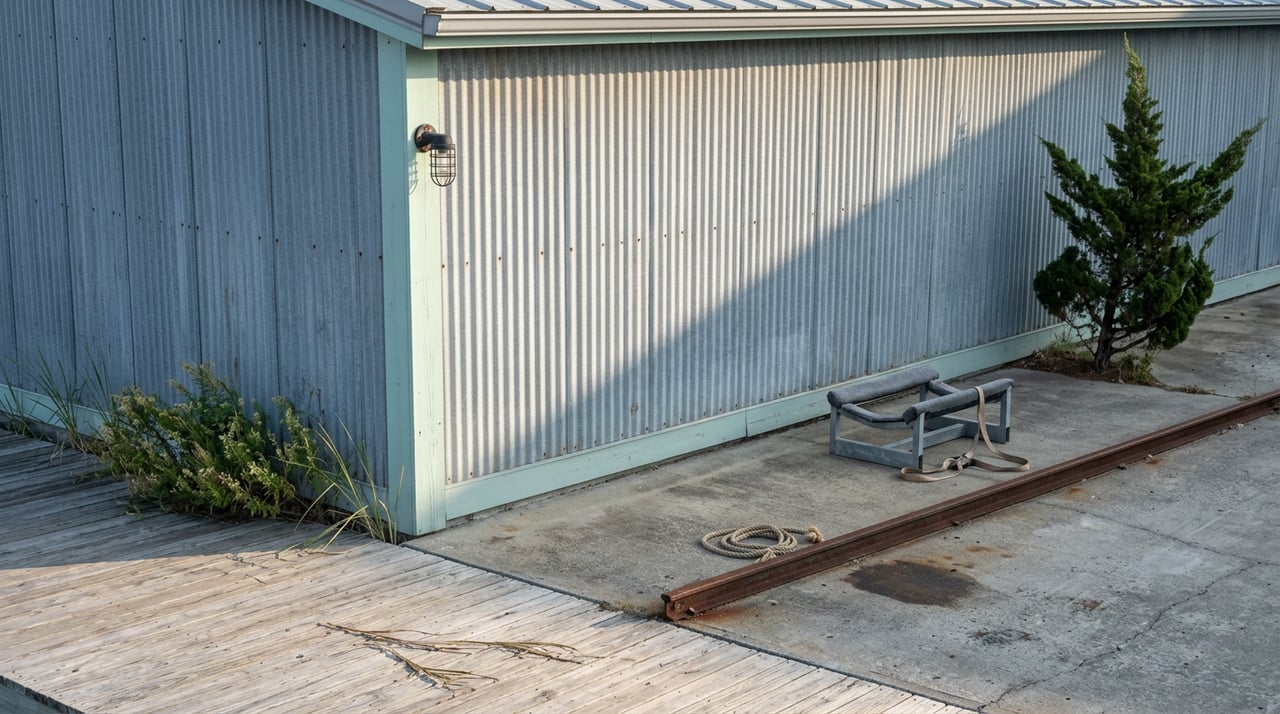
The scale is easy to miss because the buildings that hold it don't look like much from Harbor Road. Weathered metal sheds, gravel lots, boats up on jack stands. What's inside those sheds is a different story: fiberglass and cold-molded hulls engineered for offshore speed, carbon fiber components, custom cabinetry finished by hand. Dare County's economy runs on tourism overall, but this particular finger of land runs on something else entirely.
How a Seafood Park Became a Yacht Address
The Wanchese Seafood Industrial Park opened in 1981 on 53 acres with a 15-acre boat basin, built by the state to give commercial fishing and processing businesses a place to work. Buddy Davis leased space there in 1983 to open the park's first boatyard, building fiberglass, semi-custom sport fishing boats with the flared bow that became his signature. It wasn't until 1993 that the park formally widened its client base from seafood only to marine-related businesses across the board, opening the door for the wave of boatbuilders who followed Davis in.
That flare, since named the Carolina flare, is now recognized as a defining feature of the entire regional boatbuilding style. Davis passed away in 2011, but the shop culture he started never left the harbor. Today the working waterfront includes Bayliss Boatworks, the largest of the group, along with Spencer Yachts, Blackwell Boatworks, Daniels Boatworks, and Harrison Boatworks, each running its own shed within a few minutes of each other.
In 2023, builders here launched a 110-foot aluminum catamaran, the largest vessel ever constructed in the village, a project that took roughly six years and required a hydraulic jack to lower the finished hull into Wanchese Harbor before towboats guided it out to Roanoke Sound.
Fishermen originally became boat builders out of necessity. They knew what they needed and would build the most effective weapon there is for catching billfish.
John Bayliss, owner of Bayliss Boatworks, made that observation in an interview with the Outer Banks Voice. The boats have changed size and material since then, but the instinct behind them hasn't.
The Fish Never Left
None of this replaced the working fish house side of Wanchese. It sits right alongside it. O'Neal's Sea Harvest still runs docks where fishermen unload catches nearly every day, and the family-run operation, headed by Benny O'Neal, still packs and sells fish, crab meat, shrimp, scallops, oysters, and clams straight off the boats. On slow fishing days the crew makes crab pots instead. It's a small operation by design, the kind of business where everybody in the park genuinely does know everybody.
The land itself carries the same layered history. Great Gut Deli sits on Thicket Lump Drive, named for the same finger of land archaeologists call the Tillett site, once home to an Algonquian population that fished these same creeks from dugout canoes centuries before anyone here poured a fiberglass hull. The name also connects to Gilbert "Moon" Tillett, one of the Outer Banks' original charter boat captains and patriarch of the Moon Tillett Fish Company. The shad boat, North Carolina's official state boat, was designed around 1878 by Wanchese boatbuilder George Washington Creef, and one of his surviving boats, the Ella View, is on display today at the Roanoke Island Maritime Museum. Boatbuilding here didn't start with sport yachts. It just changed shape.
What's Open on Harbor Road and Mill Landing Right Now
If you're timing an afternoon down here, a few places anchor the routine:
- Wanchese Marina & Landing Grill on Mill Landing Road serves breakfast through dinner with a waterfront steam bar for local seafood, and they'll deliver anywhere from the south end of Wanchese to the north end of Manteo.
- O'Neal's Sea Harvest, on Harbor Road inside the industrial park, runs a lunch counter next to its retail seafood market, so you can eat and shop for dinner in the same stop.
- Great Gut Deli, on Thicket Lump Drive, is a lunch counter built around owner Annie Davis's homemade daily specials.
- Johanna's food truck, parked at the Wanchese Tiki Hut inside Safe Harbor Outer Banks, serves wraps, seafood baskets, and a tuna poke bowl that regulars specifically seek out.
The Tiki Bar itself is worth building your afternoon around. It's open Tuesday through Saturday starting at 11 a.m., but the real show is between 4 and 5 p.m., when the charter fleet comes back in and unloads right in front of you. Live music picks up on Friday and Saturday nights through the warm months, and the fall calendar is already filling in. The Daniel Jordan Band is booked at the Wanchese Tiki Bar for September 12, 2026, one more sign that the venue's programming runs well past peak tourist season.
Safe Harbor Outer Banks, the marina that hosts the Tiki Bar, is also where National Geographic filmed Wicked Tuna: North vs. South, which tracks the same charter fleet you can watch dock every afternoon from a barstool.
The Church That Anchors Both Traditions
Bethany United Methodist Church sits at the center of Wanchese's calendar in a way that ties the old village to the new one. Daniels Day, a family reunion for the Daniels family, who have been on Roanoke Island since 1736, has been held at Bethany since 1934. It's one of the longest-running traditions in the village, older than the seafood park itself.
This November, Bethany's role expands. The Roanoke Island Historical Association, the same team that has run The Lost Colony Wine & Culinary Festival for seven years, is bringing back the Roanoke Island Oyster Shellabration & BBQ at Safe Harbor Marina and Tiki Bar for its second year. The inaugural event, held November 2, 2025, drew oysters from North Carolina growers, barbecue from Pigman's, shrimp from Sea Chef Catering, live music from the Blue Crab Boys, and a Pow Wow performance from Indigenous cast members of The Lost Colony. Bethany United Methodist Church supplied the baked goods, cakes, brownies, and bars sold alongside the oyster stations. Wanchese used to have its own dedicated seafood festival before that tradition folded into what's now the Outer Banks Seafood Festival in Nags Head. The Shellabration, hosted a few hundred feet from where charter boats dock every afternoon, feels like the harbor claiming that piece of its identity back.
The Village Keeps Both Jobs
What makes Wanchese work isn't that it chose between being a fishing village and being a yacht-building hub. It kept both jobs and let them share the same half mile of waterfront. The captain hosing down his deck at 4 p.m. and the welder walking a finished hull down to the water are doing work that looks completely different but comes from the same 150-year-old instinct: build what the water demands, sell what it gives you. That's not a nostalgia story. It's an active one, still happening on Harbor Road most days you care to look.
If you're weighing what a property near this working waterfront is actually worth, or want a read on how Wanchese fits into the broader central Outer Banks market, The Gamiel Team knows this harbor block by block. Partner With Us for a conversation grounded in what's actually happening on these docks, not just what the listing photos show.